
Does guilt ever weigh you down, making you question whether you’re actually a good person?
In the Catholic faith, we strive to live morally upright lives, but sometimes guilt can feel overwhelming. Guilt can feel like an unbearable burden rather than a call to change. The truth is: Not all guilt is created equal. Some guilt is a natural and healthy response that nudges us toward growth and healing. But other times, guilt is fueled by distorted thinking, past wounds, or even a misunderstanding of God’s mercy. Instead of helping us, it keeps us stuck.
So how do we tell the difference? When is guilt a holy invitation to repentance and when is it a false weight that God never intended us to carry? Let’s explore the psychology behind guilt, how our faith and religious beliefs help us navigate it, and how to embrace true healing while letting go of unnecessary shame.
Helpful Catholic Guilt
Guilt is appropriate and fits the facts of a situation when it signals a real moral failing and motivates us to seek forgiveness, repair harm, and grow in virtue. Because we value being a good person, guilty feelings motivate us to engage in self-reflection and hold us accountable to doing better in the future if we discover we did not live up to our highest standards. Healthy guilt is actually a good thing because it prompts us to do what is necessary to return to a state of grace.

Examples of Helpful Catholic Guilt
- Lying to a friend and feeling guilt that leads you to confess and make amends.
- Missing Mass on Sunday without a valid reason and feeling guilt that prompts you to return to the sacraments.
- Speaking harshly to a loved one and feeling guilty, which leads to an apology and effort to be more patient.
- Recognizing a pattern of selfishness and feeling guilt that inspires a renewed commitment to generosity.
- Living in a way that contradicts Church teaching, such as engaging in premarital sex or neglecting spiritual purity, and feeling interior unrest that leads to deeper conversion.
What does psychology say about helpful guilt?
Healthy guilt aligns with our moral compass that guides ethical behavior. It helps us repair relationships, develop empathy, and act in accordance with our values. Guilt in the appropriate context helps us grow. This idea of helpful versus unhelpful emotions comes from Dialectical Behavioral Therapy (DBT).
Using its model of emotions, DBT categorizes emotions as either: 1. Emotions that fit the facts or 2. Emotions that do not fit the facts.
DBT on Helpful Guilt (Fact-Based Guilt)
Definition: Guilt that accurately reflects when a person has violated their moral or ethical values. This guilt serves a positive function by motivating change and repairing harm by taking corrective actions.
DBT Says:
- Guilt fits the facts when you’ve done something that violates your values.
- Healthy guilt motivates action – seeking forgiveness, making amends, or changing behavior.
- Guilty feelings that fit the facts of the situation helps you grow spiritually and emotionally, rather than getting stuck in self-condemnation.
Examples of Helpful Catholic Guilt in DBT Terms:
- You lied to a friend and feel guilty → You apologize and commit to honesty.
- You missed Mass due to laziness → You recognize it, go to confession, and resolve to prioritize receiving the Blessed Sacrament.
- You were harsh with your child in anger → You feel guilt, ask for forgiveness, and work on patience.
DBT Skill to Manage Helpful Guilt:
- Problem-Solving – Identify the mistake, make amends, and commit to change.
When we are in a state of mortal sin, helpful Catholic guilt motivates us to repent and return to following Jesus Christ. If we never felt guilt, we would never repent. Helpful guilt motivates us to be embark on the continuous process of growth – spiritually, mentally, and emotionally.
Unhelpful Catholic Guilt
These are circumstances where guilt does NOT fit the facts. Past wounds and unhelpful, distorted thoughts usually fuel this type of guilt. Unhelpful guilt arises when it is disproportionate to the situation, driven by cognitive distortions, religious scrupulosity, or negative core beliefs rather than genuine sin.

Examples of Unhelpful Catholic Guilt
- Feeling guilty for experiencing human emotions like anger, sadness, or fear (believing emotions are sinful).
- Feeling guilt after setting healthy boundaries because of past religious or family conditioning to “always be self-sacrificing.”
- Feeling unworthy to receive God’s mercy, believing past sins make you irredeemable.
- Feeling excessive guilt for minor imperfections, such as forgetting to say a prayer or being distracted in Mass.
- Feeling guilty about experiencing joy, success, or pleasure, believing suffering is the only “holy” path.
Cognitive Distortions & Negative Core Beliefs Contributing to Unhelpful Guilt
- All-or-Nothing Thinking: “If I’m not perfectly holy, I must be a terrible Catholic.”
- Overgeneralization: “I sinned once, so I must be a bad person.”
- Emotional Reasoning: “I feel guilty, so I must have done something wrong.”
- Should Statements: “I should always be serving others, or I’m selfish.”
- Negative Core Belief: “I am unworthy of God’s love.”
What does psychology say about unhelpful guilt?
Excessive guilt can lead to religious scrupulosity, perfectionism, and shame-based identity. Intrusive thoughts cause us to second-guess our own goodness and believe we are constantly committing a multitude of sins. Shame says “I am bad,” while healthy guilt says “I did something bad.” These become an unconscious negative core belief that affects the lens we view everything through in our lives. Many negative core beliefs come from psychological wounds of family dysfunction growing up. Therapy approaches like Cognitive Behavioral Therapy (CBT) and DBT skills help reframe irrational guilt.

DBT on Unhelpful Guilt (Distorted or Excessive Guilt)
Definition: Guilt that is disproportionate, misplaced, or based on unrealistic standards. It does not fit the facts and past experiences, cognitive distortions, or shame usually fuel the intensity of the feeling.
DBT Says:
- Guilt does not fit the facts if you haven’t actually done anything wrong.
- Unhelpful guilt is amplified by distorted thoughts (e.g., “I’m a bad person” rather than “I made a mistake”).
- It often overlaps with shame – the belief that “I am bad” rather than “I did something bad.”
- It leads to emotional suffering rather than change.
Examples of Unhelpful Catholic Guilt in DBT Terms:
- You feel guilty for feeling sad or angry (even though emotions are normal).
- You were pressured into something and blame yourself even though it wasn’t your fault.
- You scrupulously obsess over minor mistakes that don’t actually violate moral law.
- You believe you’re unforgivable, even after confession and even with a contrite heart.
DBT Skills to Manage Unhelpful Guilt:
- Check the Facts – Ask: Did I actually do something wrong or is this an exaggerated thought?
- Opposite Action – If guilt is excessive, practice self-compassion instead of self-punishment.
- Radical Acceptance – Accept that past mistakes don’t define you, and trust in God’s mercy.
The Limbic System, Mental Illness, and Catholic Guilt
The limbic system is the brain’s emotional center, responsible for processing emotions, memory, and motivation. Within this system:
- The amygdala (the fear and threat detection center) becomes activated when we feel guilt, especially if we fear punishment or rejection.
- The prefrontal cortex (responsible for moral reasoning) helps us evaluate whether guilt is justified and what actions to take.
- The anterior cingulate cortex (ACC) allows self-evaluation and error detection, meaning it plays a role in the discomfort we feel when we act against our values.
- Dopamine & serotonin levels influence how intensely we experience guilt—imbalances can lead to excessive guilt (as seen in anxiety or depression).

The limbic system plays a key role in guilt by detecting moral violations, creating emotional distress, and motivating corrective action. When functioning properly, it helps regulate guilt appropriately, but when dysregulated, it can contribute to excessive guilt, shame, or scrupulosity.
It’s important to note that if this dysregulation is impacting your ability to function in everyday life, then you may be suffering from a mental health disorder. Scrupulosity can sometimes manifest as obsessive-compulsive disorder or other anxiety and depressive disorders.
There are medications and therapies designed to help you through this. They do not oppose the teachings of the Church. You might even be able to find a good Catholic therapist who specializes in this at catholictherapists.com! But, please note, you can absolutely find a good and helpful therapist that doesn’t necessarily practice the faith, and seek out a spiritual director separately.
Religious Trauma and Catholic Guilt
Religious trauma occurs when someone’s faith experiences involve chronic fear, shame, or coercion, leading to psychological distress. It often results from:
- Fear-based teachings that emphasize punishment over mercy.
- Scrupulosity (religious OCD), where someone feels constant, excessive guilt over perceived sins.
- Spiritual abuse, where authority figures use guilt to control behavior.
- Lack of emphasis on God’s mercy, making people feel permanently condemned.
How Trauma Affects Guilt:
- The amygdala becomes hypersensitive, making even minor moral infractions feel catastrophic.
- The prefrontal cortex struggles to override fear-based guilt, making it hard to distinguish between real sin and excessive scruples.
- The nervous system stays in a state of hyperarousal, leading to chronic anxiety about being “bad” or “unforgivable” and even low self-esteem.
When a person experiences religious trauma, guilt often becomes distorted, making it chronic and debilitating rather than constructive. Healing often requires relearning a healthier view of sin, grace, and forgiveness—often with professional help and spiritual guidance. If you’re experiencing chronic and debilitating guilt related to religious trauma, you must seek appropriate mental health treatment. Evidence-based trauma therapy like EMDR will help you overcome this.
The Catechism of the Catholic Church and Catholic Guilt
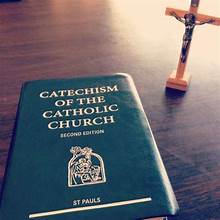
The Catechism of the Catholic Church (CCC) does not explicitly use the word “scrupulosity” or phrase “unhealthy guilt,” but it does address related concepts, such as an erroneous conscience, excessive guilt, and unhealthy fear of sin. It also speaks about the role of true contrition and repentance in leading us back to God.
Unhealthy Guilt in the Catechism
Scrupulosity is essentially an overactive or distorted conscience, where a person feels guilty for things that are not actually sins or experiences excessive guilt for minor faults. The CCC warns about this in several places:
Erroneous conscience
- CCC 1783-1784 emphasizes that a properly formed conscience can distinguish true guilt (which calls us to repentance) from false guilt (which leads to unnecessary distress). The Church teaches that truth, reason, and God’s wisdom form a strong conscience. If we let negative influences shape it, we might experience guilt for the wrong reasons or lack guilt when we should feel it.
- 1783 says, “Conscience must be informed and moral judgment enlightened. A well-formed conscience is upright and truthful. It formulates its judgments according to reason, in conformity with the true good willed by the wisdom of the Creator. The education of conscience is indispensable for human beings who are subjected to negative influences and tempted by sin to prefer their own judgment and to reject authoritative teachings.”
- 1784 says, “The education of the conscience is a lifelong task. From the earliest years, it awakens the child to the knowledge and practice of the interior law recognized by conscience. Prudent education teaches virtue; it prevents or cures fear, selfishness, and pride, resentment arising from guilt, and feelings of complacency, born of human weakness and faults. The education of the conscience guarantees freedom and engenders peace of heart.”
Excessive Guilt
- CCC 2091-2092 talks emphasizes that guilt should never lead to despair because it prevents us from trusting in God’s mercy.
- It says, “By despair, man ceases to hope for his personal salvation from God, for help in attaining it, or for the forgiveness of his sins. Despair is contrary to God’s goodness, to his justice—for the Lord is faithful to his promises—and to his mercy.”
- CCC 1453 talks about how even imperfect contrition still leads to God’s mercy and forgiveness.
- It says, “The contrition called ‘imperfect’ (or ‘attrition’) is also a gift of God, a prompting of the Holy Spirit. It is born of the consideration of sin’s ugliness or the fear of eternal damnation and the other penalties threatening the sinner. Such a stirring of conscience can initiate an interior process which, under the prompting of grace, will be brought to completion by sacramental absolution.”
Healthy Guilt in the Catechism (True Contrition and Repentance)

The Catechism clearly teaches that guilt has a purpose – to lead us to repentance and conversion. This is part of God’s mercy and not a form of punishment. The Church teaches that guilt is healthy when it moves us toward God, repentance, and healing. It becomes unhealthy when it leads to despair, scrupulosity, or fear-based faith.
- CCC 1431 is about how true interior repentance motivates us to radically reorient our whole life; guilt moves us to change what we are doing when it doesn’t align with what we truly believe.
- It says, “Interior repentance is a radical reorientation of our whole life, a return, a conversion to God with all our heart, an end of sin, a turning away from evil, with repugnance toward the evil actions we have committed. At the same time, it entails the desire and resolution to change one’s life, with hope in God’s mercy and trust in the help of his grace.”
- CCC 1781 is about how healthy guilt helps us choose good.
- It says, “Conscience enables one to assume responsibility for the acts performed. If man commits evil, the just judgment of conscience can remain within him as the witness to the universal truth of the good, at the same time as the evil of his particular choice. The verdict of the judgment of conscience remains a pledge of hope and mercy. In attesting to the fault committed, it calls to mind the forgiveness that must be asked, the good that must still be practiced, and the virtue that must be constantly cultivated with the grace of God.”
Religious Upbringing and Catholic Guilt
Growing up in a religious environment significantly shapes a person’s relationship with guilt. Some key psychological findings with those who were raised Catholic:
- Religious morals create a clear sense of right and wrong, which can lead to healthy guilt when violating values.
- Parental and church teachings strongly influence whether guilt is framed constructively (as a call to change) or destructively (as self-condemnation).
- Authoritarian religious environments (rigid, fear-based teaching) tend to increase shame-based guilt, leading to self-punishment rather than growth.
- Compassionate religious environments encourage accountability paired with forgiveness, leading to healthier guilt resolution.
A religious upbringing can foster either healthy or unhealthy guilt. It depends on how we learn about sin, grace, and repentance, and what our earliest experiences with relationships and religious practice were like.
What do the saints say about Catholic guilt?

St. Alphonsus Liguori
St. Alphonsus is well-known for his teachings on conscience and scrupulosity. He deeply understood how guilt, when misunderstood, could lead to spiritual paralysis rather than repentance.
He said, “True humility is not to think ill of oneself, but to recognize our nothingness and trust wholly in God.” Scrupulosity distorts humility into self-condemnation rather than trust in God’s unconditional love. Therefore, helpful guilt leads to repentance, confession, and trust in God’s mercy. Unhelpful guilt leads to scrupulosity and despair, where one feels unforgivable despite God’s infinite love.
St. Ignatius of Loyola
St. Ignatius developed the Rules for the Discernment of Spirits, which help distinguish between true guilt (from God) and false guilt (from the enemy). He says, “It is characteristic of the evil spirit to cause gnawing anxiety, to sadden, and to place obstacles, disquieting with false reasons, so that one may not go forward.” Unhelpful guilt leads to spiritual stagnation. Satan manipulates guilt to make us doubt God’s forgiveness. Helpful guilt leads to peaceful conviction and a desire to return to God. Unhelpful guilt creates anxiety, despair, and discouragement, keeping us from growing spiritually.
St. Catherine of Genoa
St. Catherine had mystical insights into purgation and divine love, showing that true guilt refines us. She said, “God sees nothing in us but what He has placed there. He loves us because we are His.” Unhelpful guilt makes us think we are unloved or beyond redemption. When we repent out of love, which is healthy guilt, we experience joyful renewal rather than crushing shame.
St. Paul the Apostle
St. Paul, once a persecutor of Christians, deeply understood guilt but also the transformative power of grace. He said, “For godly sorrow produces a repentance that leads to salvation without regret, whereas worldly sorrow produces death.” – 2 Corinthians 7:10. Healthy guilt leads to heartfelt sorrow and repentance; unhealthy guilt results in hopelessness and great damage to our relationship with the Lord. The latter can manifest as mental illnesses.
St. Thérèse of Lisieux
Though she lived a short life, St. Thérèse had deep insights into guilt, scrupulosity, and trust in God’s mercy. She said, “How few souls there are who let themselves be carried by His love! Most measure His love according to their own narrow hearts.” Unhelpful guilt comes from doubting God’s love and His desire to forgive sinners. Healthy guilt involves recognizing our faults, but inviting the Holy Spirit into the healing process.

These saints affirm that guilt has a holy purpose when it leads us to God. However, Satan twists guilt into despair to keep us from healing. The key difference is whether guilt brings us closer to Christ or pushes us further away.
Discerning Helpful and Unhelpful Catholic Guilt
Helpful Catholic guilt aligns with truth and leads to repentance, repair, and renewal.
Unhelpful Catholic guilt is often rooted in fear, cognitive distortions, or shame, leading to anxiety, scrupulosity, and spiritual exhaustion. Psychology, scripture, the Catechism, and the saints all affirm that God’s mercy is greater than guilt.
Discerning between the two often takes time and effort, but it is totally possible. The DBT skills mentioned above will help you take meaningful action forward once you discover which type of guilt you are experiencing. Praying that this framework and perspective is fruitful for you!